Eye (ocular) cancer treatment in Istanbul, Turkey
Eye (intraocular) cancer is treated with an emphasis on preserving the eye and vision where possible — plaque brachytherapy, in which a radioactive plaque is placed on the eye, external or charged-particle radiation, laser therapy and thermotherapy, and surgery ranging from local resection to enucleation (removal of the eye) for large tumours. In adults the most common type is uveal (ocular) melanoma; in children it is retinoblastoma, which also uses chemotherapy. Istanbul hospitals offer this subspecialized ocular-oncology pathway, often at JCI-accredited, state-authorized centers and well below Western-European prices for the same protocol. Every price we show is an illustrative placeholder until verified partner-hospital quotes exist — and you pay the hospital directly, never us. Start with a free 72-hour review of your reports before you decide anything.
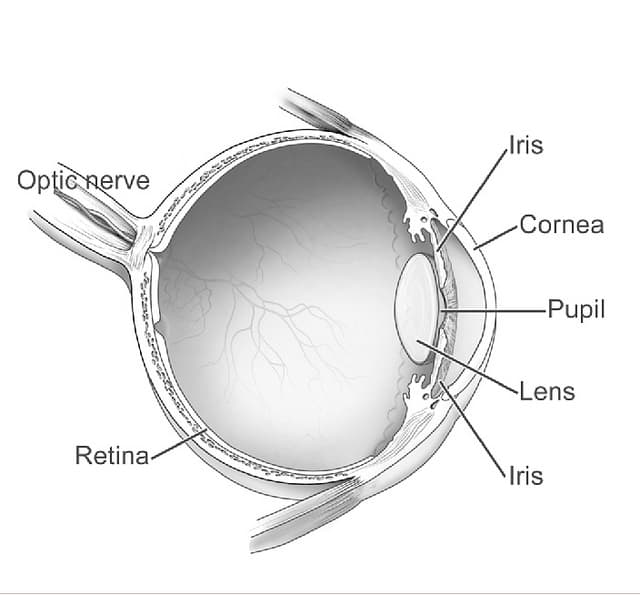
Cross-section of the human eye showing the cornea, iris, pupil, lens, retina and optic nerve.
National Eye Institute, U.S. National Institutes of Health — public domain (opens in a new tab) ↗What eye cancer is
The U.S. National Cancer Institute describes eye (intraocular) cancer as cancer that forms in the tissues of the eye. In adults, the most common primary intraocular cancer is uveal (ocular) melanoma, which begins in the pigment cells of the uvea — the middle layer of the eye. In children, the most common eye cancer is retinoblastoma, which starts in the retina and can be inherited. The NCI also describes intraocular (eye) lymphoma among the cancers that can arise inside the eye.
Diagnosis is unusual in oncology because uveal melanoma is often identified by an eye examination and imaging — such as ophthalmoscopy and ultrasound — frequently without a biopsy, so accurate ophthalmic imaging is central to the workup. Because eye cancer is uncommon and its care is highly subspecialized under ocular oncology, being matched to a team that treats it regularly matters. Browse the wider cancer types hub for related diagnoses.
Treatment options
The modalities the NCI lists for eye cancer, and an honest note on each:
- Radiation therapy. A mainstay of eye-sparing treatment — plaque brachytherapy, in which a small radioactive plaque is placed on the outside of the eye over the tumour, and external or charged-particle radiation. The aim is to control the tumour while keeping the eye and as much vision as possible.
- Laser therapy / thermotherapy. Laser treatment and thermotherapy use light or heat to destroy tumour tissue, and can be used for smaller tumours or alongside radiation. Whether they apply depends on the tumour’s size and location.
- Surgery. Options range from local resection, which removes the tumour while sparing the eye, to enucleation — removal of the eye — generally reserved for large tumours or when other treatments cannot control the disease. The choice is a decision for an ocular-oncology team.
- Chemotherapy and systemic therapy. For retinoblastoma, chemotherapy is central and can be given intra-arterially into the artery feeding the eye or intravitreally into the eye, as well as systemically. For metastatic uveal melanoma, the NCI notes newer systemic options such as tebentafusp for HLA-A*02:01-positive patients. Which applies is decided by your tumour type and testing.
See how these modalities work in general on the treatments & technology hub.
What it costs
There is no single eye-cancer price, because the cost is driven by the type and size of the tumour, whether treatment is plaque brachytherapy, charged-particle radiation, laser or thermotherapy, whether eye-sparing surgery or enucleation is needed, and — for retinoblastoma or metastatic uveal melanoma — how many chemotherapy or systemic-drug cycles are involved, which can dominate the total. Every figure OncologyIstanbul™ publishes today is an illustrative placeholder pending verified partner-hospital quotes, and each is itemized so you can hold a real quote up against it line by line. See the Turkey Oncology Price Index or the full cancer treatment cost in Turkey breakdown.
The hospital, verified
We don’t show a wall of smiling surgeons or a “ranked” list — those are the easiest things to fabricate. Instead, you’re matched to one state-authorized Istanbul partner hospital whose ocular-oncology subspecialty fits your diagnosis, and you can verify its authorization against the Republic of Turkey Ministry of Health’s own records and its JCI accreditation in JCI’s public directory before you commit. Named specialist profiles appear only when a verified, consented physician is behind the name. See the full guide to cancer hospitals in Istanbul and how to check one yourself.
Where this fits
This is one diagnosis within the broader cancer treatment in Istanbul pillar. If you want your own reports read first, a free second opinion organizes and verifies your ophthalmic imaging and pathology into a plain-language case file in your language before you decide whether to travel.
Check everything here — us included
Common questions
Can I get eye (ocular) cancer treatment in Turkey?
Yes. Istanbul hospitals provide the eye-cancer pathway the U.S. National Cancer Institute describes — plaque brachytherapy and external or charged-particle radiation, laser therapy and thermotherapy, eye-sparing surgery or enucleation for large tumours, and, for retinoblastoma in children, chemotherapy that can be given intra-arterially or intravitreally. Eye-cancer care is highly subspecialized under ocular oncology, so the match matters more than usual. Many centers hold JCI accreditation and Turkish Ministry of Health state authorization, both of which you can check yourself before you commit. The honest first step is a free case review of your ophthalmic imaging and pathology so the plan is understood before you travel.
Can my eye be saved, or will it have to be removed?
Often the eye can be preserved. The NCI describes eye-sparing options — plaque brachytherapy, in which a radioactive plaque is placed on the eye, plus external or charged-particle radiation, laser therapy and thermotherapy — that aim to control the tumour while keeping the eye and as much vision as possible. Enucleation, surgical removal of the eye, is generally reserved for large tumours or when other treatments cannot control the disease. Which path fits depends on the tumour's size, location and type, and is a decision for an ocular-oncology team. A case review will tell you what your reports do and don't yet establish. This is general information, not a treatment recommendation.
Is retinoblastoma in children treated differently?
Yes. Retinoblastoma is the most common eye cancer in children, and the NCI describes a distinct pathway focused on saving the child's life, then the eye, then vision where possible. Alongside plaque brachytherapy, laser therapy and thermotherapy, chemotherapy plays a central role and can be delivered by intra-arterial infusion into the artery feeding the eye or by intravitreal injection into the eye itself, in addition to systemic routes. Enucleation may still be needed for advanced tumours. Because it is inherited in some families, genetic counselling can be part of care. Treatment belongs with a specialist pediatric ocular-oncology team, and a case review will flag what your reports already establish.
How much does eye cancer treatment cost in Istanbul?
There is no single figure, because the cost is driven by the type and size of the tumour, whether treatment is plaque brachytherapy, charged-particle radiation, laser or thermotherapy, whether eye-sparing surgery or enucleation is needed, and — for retinoblastoma or metastatic uveal melanoma — how many chemotherapy or systemic-drug cycles are involved, which can dominate the total. Istanbul typically runs well below Western-European prices for the same protocol, but every figure OncologyIstanbul™ publishes today is an illustrative placeholder pending verified partner-hospital quotes, itemized so you can check a real written quote line by line. See the Turkey Oncology Price Index for current ranges.
Start with a free 72-hour case review
Send your ophthalmic imaging and pathology. Get a verified case file in your language — free, confidential, no obligation.
This page is general information, not medical advice. Medical facts are grounded in the U.S. National Cancer Institute; prices shown are illustrative placeholders pending verified partner-hospital quotes, not offers. Every cancer case is individual; assessments are based on the reports you provide and do not replace in-person examination.