Prostate cancer treatment in Istanbul, Turkey
Prostate cancer is common in older men and often slow-growing, so low-risk disease may be watched with active surveillance rather than treated straight away. When treatment is needed, the main options are surgery to remove the prostate — a radical prostatectomy, frequently robot-assisted — radiation therapy such as IMRT or brachytherapy seed implants, and hormone (androgen deprivation) therapy for higher-risk or advanced cases. PSA, Gleason score and staging drive the choice, and it is genuinely individual. Istanbul hospitals offer this full pathway, often at JCI-accredited, state-authorized centers and well below Western-European prices for the same protocol. Every price we show is an illustrative placeholder until verified partner-hospital quotes exist — and you pay the hospital directly, never us. Start with a free 72-hour review of your reports before you decide anything.
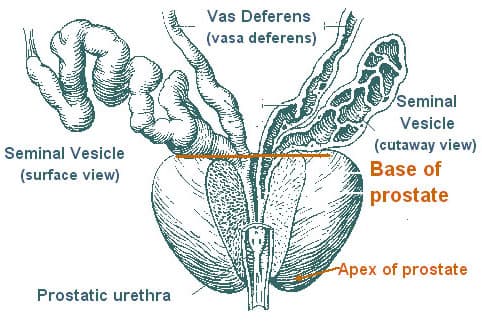
Anatomy of the prostate gland and surrounding structures, including the seminal vesicles and prostatic urethra.
SEER Training Modules, U.S. National Cancer Institute — public domain (opens in a new tab) ↗What prostate cancer is
The U.S. National Cancer Institute describes prostate cancer as cancer that forms in the prostate, a gland in the male reproductive system. It is one of the most common cancers in men, is found mainly in older men, and is often slow-growing— many cases never cause symptoms or threaten life, while some are aggressive and need prompt treatment. The NCI lists older age, family history, certain inherited gene changes and race among the factors that affect risk.
Risk is assessed with the PSA blood test, the Gleason score (Grade Group) from a biopsy, and staging that shows whether the cancer is confined to the prostate or has spread. Because so many prostate cancers grow slowly, the NCI notes that the right choice can be careful monitoring rather than immediate treatment. Browse the wider cancer types hub for related diagnoses.
Treatment options
The modalities the NCI lists for prostate cancer, and an honest note on each:
- Active surveillance. Careful monitoring without immediate treatment for low-risk disease, since many prostate cancers grow slowly — repeat PSA tests, exams and sometimes further biopsies, with treatment started only if the cancer shows signs of progressing.
- Surgery. Radical prostatectomy removes the whole prostate, frequently with a robot-assisted (minimally invasive) approach. It is a standard option for localized disease, and its side-effect profile differs from radiation. See cancer surgery in Turkey.
- Radiation therapy. External-beam radiation, including IMRT, and brachytherapy — radioactive seed implants placed in the prostate — are standard alternatives to surgery for localized disease. Explore radiotherapy in Turkey.
- Hormone therapy and advanced-disease drugs. Hormone (androgen deprivation) therapy lowers the male hormones that fuel prostate cancer and is used for higher-risk or advanced disease, sometimes with radiation. In advanced cases chemotherapy, targeted therapy (PARP inhibitors for certain mutations) and newer agents are added. See hormone therapy and targeted therapy.
Low-risk disease may simply be watched, and the choice among surgery, radiation and surveillance is individual. See how these modalities work in general on the treatments & technology hub.
What it costs
There is no single prostate-cancer price, because the cost is driven by which path you take — active surveillance is mostly monitoring, a robot-assisted prostatectomy is a surgical episode, radiation is a course of sessions (IMRT or brachytherapy), and hormone or targeted therapy for advanced disease is priced per cycle and can dominate the total. Every figure OncologyIstanbul™ publishes today is an illustrative placeholder pending verified partner-hospital quotes, and each is itemized so you can hold a real quote up against it line by line. See the Turkey Oncology Price Index or the full cancer treatment cost in Turkey breakdown.
The hospital, verified
We don’t show a wall of smiling surgeons or a “ranked” list — those are the easiest things to fabricate. Instead, you’re matched to one state-authorized Istanbul partner hospital whose urology and radiation oncology subspecialty fits your diagnosis, and you can verify its authorization against the Republic of Turkey Ministry of Health’s own records and its JCI accreditation in JCI’s public directory before you commit. Named specialist profiles appear only when a verified, consented physician is behind the name. See the full guide to cancer hospitals in Istanbul and how to check one yourself.
Where this fits
This is one diagnosis within the broader cancer treatment in Istanbul pillar. If you want your own reports read first, a free second opinion organizes and verifies your PSA, biopsy and imaging into a plain-language case file in your language before you decide whether to travel.
Related cancers
Check everything here — us included
Common questions
Can I get prostate cancer treatment in Turkey?
Yes. Istanbul hospitals provide the full prostate-cancer pathway the U.S. National Cancer Institute describes — active surveillance for low-risk disease, radical prostatectomy to remove the prostate (frequently robot-assisted), radiation therapy including external-beam IMRT and brachytherapy seed implants, and hormone (androgen deprivation) therapy for higher-risk or advanced cases, with chemotherapy and targeted drugs where testing supports them. Many centers hold JCI accreditation and Turkish Ministry of Health state authorization, both of which you can check yourself before you commit. The honest first step is a free case review of your PSA, biopsy and imaging so the plan is understood before you travel.
What is active surveillance, and who is it for?
Active surveillance means carefully monitoring the cancer instead of treating it right away, using repeat PSA tests, exams, imaging and sometimes further biopsies, and starting treatment only if signs show the disease is progressing. Per the NCI, many prostate cancers grow slowly, so for low-risk disease this approach can avoid or delay the side effects of surgery and radiation without lowering the chance of cure. It is a legitimate, guideline-recognized choice — not doing nothing. Whether your Gleason score, PSA and stage make you a candidate is an individual decision, and a case review will flag what your reports do and don't yet establish.
Surgery versus radiation — how do I choose?
For localized prostate cancer the NCI lists surgery (radical prostatectomy) and radiation (external-beam IMRT or brachytherapy seed implants) as standard options with broadly comparable cure rates, so the choice often turns on side-effect profiles, your age and health, tumour grade and personal preference rather than on one being universally better. Surgery and radiation carry different risks around urinary and sexual function, and radiation avoids an operation but takes weeks of sessions. This is a decision for a urology and radiation-oncology team, not a template — a free case review lays out what applies to your specific reports so you can weigh it properly.
How much does prostate cancer treatment cost in Istanbul?
There is no single figure, because the cost is driven by which path you take — active surveillance is mostly monitoring, robot-assisted prostatectomy is a surgical episode, radiation is a course of sessions (IMRT or brachytherapy), and hormone or targeted therapy for advanced disease is priced per cycle and can dominate the total. Istanbul typically runs well below Western-European prices for the same protocol, but every figure OncologyIstanbul™ publishes today is an illustrative placeholder pending verified partner-hospital quotes, itemized so you can check a real written quote line by line. You pay the hospital directly, never us. See the Turkey Oncology Price Index for current ranges.
Start with a free 72-hour case review
Send your PSA, biopsy and imaging. Get a verified case file in your language — free, confidential, no obligation.
This page is general information, not medical advice. Medical facts are grounded in the U.S. National Cancer Institute; prices shown are illustrative placeholders pending verified partner-hospital quotes, not offers. Every cancer case is individual; assessments are based on the reports you provide and do not replace in-person examination.