Bladder cancer treatment in Istanbul, Turkey
Bladder cancer is treated in Istanbul with the same core options the U.S. National Cancer Institute describes — a transurethral resection (TURBT) and intravesical BCG for early disease, or removal of the bladder with chemotherapy and immunotherapy for muscle-invasive disease — usually well below Western-European prices. OncologyIstanbul™ isn’t a hospital: we give you a free 72-hour review of your own reports and hand you the tools to verify any hospital yourself before you decide anything.
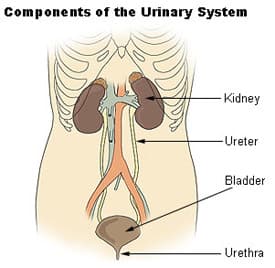
The urinary system — the kidneys filter blood to form urine, which drains through the ureters into the bladder and leaves via the urethra.
SEER Training Modules, U.S. National Cancer Institute — public domain (opens in a new tab) ↗What bladder cancer is
Bladder cancer begins in the cells lining the bladder. The U.S. National Cancer Institute notes that nearly all cases are urothelial (transitional cell) carcinoma, with less common squamous cell carcinoma, adenocarcinoma and small cell forms. What drives treatment most is how deep it goes: tumors are classed as non-muscle-invasive or muscle-invasive. Diagnosis usually involves cystoscopy (a camera into the bladder), urine cytology, and biopsy — often taken during a TURBT — with CT or MRI urography to stage it. For the primary-source description, see the NCI’s bladder cancer overview (opens in a new tab).
Treatment options
These are the modalities the NCI lists for bladder cancer. Which apply to you depends mainly on whether the disease is non-muscle-invasive or muscle-invasive, and is a decision for the treating team.
- TURBT (transurethral resection of bladder tumor). Removes the tumor through the urethra with no external incision. It is both a diagnostic step and the first treatment for non-muscle-invasive disease.
- Intravesical therapy. After TURBT, BCG immunotherapy or chemotherapy is instilled directly into the bladder to lower the chance of recurrence in non-muscle-invasive cancer.
- Cystectomy. Radical (or, less often, partial) removal of the bladder for muscle-invasive disease, with urinary reconstruction such as a neobladder or an ileal conduit.
- Chemotherapy. Systemic (often cisplatin-based) chemotherapy is used before cystectomy (neoadjuvant) or for advanced disease.
- Immunotherapy. Immune checkpoint inhibitors are used for advanced or recurrent bladder cancer, in addition to the BCG used intravesically.
- Radiation therapy. Can be combined with chemotherapy for bladder-preserving treatment of some muscle-invasive tumors, or used to relieve symptoms.
- Targeted therapy. For selected advanced cases with specific molecular features, the NCI describes targeted drugs as an option alongside the modalities above.
Full detail is in the NCI’s Bladder Cancer Treatment (PDQ) (opens in a new tab). See also the treatments & technology hub.
What it costs
There is no single price for bladder cancer, and we won’t invent one. The cost is driven by the specifics of yourplan: whether it’s an outpatient TURBT with a course of intravesical BCG, or a major radical cystectomy with urinary reconstruction and a longer hospital stay; how many BCG or chemotherapy instillations are needed; and whether systemic chemotherapy or immunotherapy drugs are involved, which can dominate the total. Every price we publish today is an illustrative placeholder pending verified partner-hospital quotes, and each figure is itemized so you can hold a real quote up against it, line by line. See the Turkey Oncology Price Index or the full cancer treatment cost in Turkey breakdown. You pay the hospital directly, only after you approve an itemized written quote — never us.
The hospital, verified
We don’t show you a “best” bladder-cancer center ranking or a wall of smiling doctors — those are the easiest things to fabricate. Instead, you’re matched to one state-authorized Istanbul partner hospital whose urologic-oncology subspecialty fits your diagnosis, and you can verify its authorization against the Republic of Turkey Ministry of Health’s own records and its JCI accreditation in JCI’s public directory before you commit. Named specialist profiles appear only when a verified, consented physician is behind the name. See the full guide to cancer hospitals in Istanbul and how to check one yourself.
Related cancers
Check everything here — us included
Common questions
Can bladder cancer be treated in Turkey?
Yes. Istanbul hospitals treat bladder cancer with the same modalities the U.S. National Cancer Institute describes — transurethral resection (TURBT), intravesical BCG or chemotherapy for non-muscle-invasive disease, and radical cystectomy with urinary reconstruction, systemic chemotherapy or immunotherapy for muscle-invasive disease. OncologyIstanbul™ is not a hospital: we organize and verify your reports into a case file, then — if you want to travel — match you to a state-authorized partner hospital by urologic-oncology fit. The clinical plan is set by the treating team, not by us.
How much does bladder cancer treatment cost in Istanbul?
It varies enormously by stage. A TURBT with a course of intravesical BCG for early, non-muscle-invasive disease is a different cost from a radical cystectomy with urinary diversion plus neoadjuvant chemotherapy for muscle-invasive disease. Istanbul is typically well below Western-European prices for the same procedure, but every figure OncologyIstanbul™ publishes today is an illustrative placeholder pending verified partner-hospital quotes, itemized so you can check any real quote line by line. See the Turkey Oncology Price Index and the cancer-treatment-cost breakdown for current ranges.
Is bladder preservation possible, or is cystectomy the only option?
It depends on the stage and grade. For non-muscle-invasive bladder cancer, TURBT plus intravesical therapy (BCG or chemotherapy) often preserves the bladder, and for some muscle-invasive cases the NCI describes bladder-preserving chemoradiation as an alternative to removing the bladder. Whether preservation is appropriate for you is a decision for the treating urologist and oncologist after reviewing your pathology — any provider promising a specific outcome before seeing your reports is a red flag.
What is the success or survival rate for bladder cancer?
There is no single honest number to quote. Bladder-cancer outcomes depend on whether the disease is non-muscle-invasive or muscle-invasive, its grade, whether it has spread, and your overall health — they are individual, not a marketing statistic, and recurrence is monitored over years. Any provider selling you a blanket 'success rate' is overpromising. We give you an organized case file and published price references so you and your own doctor can weigh a real plan; we never predict your result.
This page is part of the wider guide to cancer treatment in Istanbul, Turkey. When you’re ready, the free second opinion organizes your reports into a verified case file in your language.
Start with a free 72-hour case review
Send your cystoscopy, TURBT pathology and imaging. Get a verified case file in your language — free, confidential, no obligation.
This page is general information, not medical advice. Every cancer case is individual; assessments are based on the reports you provide and do not replace in-person examination or the judgment of your treating team.