Penile cancer treatment in Istanbul, Turkey
Penile cancer is usually treated with surgery — organ-preserving options such as laser therapy, Mohs surgery, wide local excision or glansectomy where the tumour is caught early, or partial or total penectomy for larger tumours — alongside evaluation of the groin lymph nodes, which strongly shapes the plan. Radiation, chemotherapy for node-positive or advanced disease, and topical therapy for very early surface lesions are also used. It is an uncommon cancer, so subspecialty pathology review matters. Istanbul hospitals offer this full pathway, often at JCI-accredited, state-authorized centers and well below Western-European prices. Every price we show is an illustrative placeholder until verified partner-hospital quotes exist — and you pay the hospital directly, never us. Start with a free 72-hour review of your reports before you decide anything.
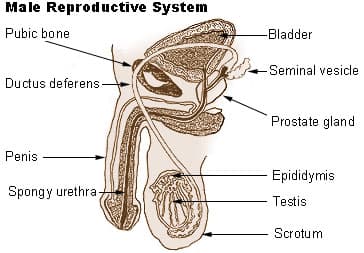
Sagittal view of the male reproductive system — the testes, scrotum, epididymis, ductus deferens, penis, prostate and seminal vesicle.
SEER Training Modules, U.S. National Cancer Institute — public domain (opens in a new tab) ↗What penile cancer is
The U.S. National Cancer Institute describes penile cancer as cancer that forms in the tissues of the penis. Most cases are squamous cell carcinomas, which begin in the flat cells lining the skin and often start on the glans or foreskin. The NCI lists infection with human papillomavirus (HPV) as a risk factor, along with not being circumcised, poor hygiene with a build-up under the foreskin (phimosis), smoking, and older age.
Diagnosis usually involves a physical examination and a biopsy of the abnormal tissue, and the extent of disease is worked out with imaging and evaluation of the groin lymph nodes, because penile cancer tends to spread there first. Because it is a rare cancer, expert subspecialty pathology review of the biopsy is worth having, and early detection often allows more organ-sparing treatment. Browse the wider cancer types hub for related diagnoses.
Treatment options
The modalities the NCI lists for penile cancer, and an honest note on each:
- Surgery. The backbone of treatment. Where the tumour is caught early, organ-preserving options — laser therapy, Mohs surgery, wide local excision or glansectomy — aim to remove the cancer while sparing as much of the penis as possible; larger tumours may need partial or total penectomy. Evaluation, and sometimes removal, of the groin lymph nodes is part of the plan.
- Radiation therapy. External-beam radiation or brachytherapy (internal radiation) is used in some plans, sometimes to preserve the penis or to treat involved lymph nodes. Whether it applies depends on your stage and the pathology.
- Chemotherapy. Chemotherapy is used for lymph-node or more advanced disease, sometimes combined with surgery. Cost scales with the number of cycles, and which drugs apply is decided by your stage rather than a template.
- Topical therapy. For very early, surface-only lesions, the NCI describes topical treatment applied to the skin as an option. It is limited to the earliest disease, which is one more reason early detection matters so much.
See how these modalities work in general on the treatments & technology hub.
What it costs
There is no single penile-cancer price, because the cost is driven by the type of surgery (an organ-preserving excision versus partial or total penectomy), whether the groin lymph nodes are evaluated or removed, whether radiation is used, and the number of chemotherapy cycleswhen node-positive or advanced disease calls for them — those are priced per cycle and can dominate the total. Every figure OncologyIstanbul™ publishes today is an illustrative placeholder pending verified partner-hospital quotes, and each is itemized so you can hold a real quote up against it line by line. See the Turkey Oncology Price Index or the full cancer treatment cost in Turkey breakdown.
The hospital, verified
We don’t show a wall of smiling surgeons or a “ranked” list — those are the easiest things to fabricate. Instead, you’re matched to one state-authorized Istanbul partner hospital whose urologic and surgical oncology subspecialty fits your diagnosis, and you can verify its authorization against the Republic of Turkey Ministry of Health’s own records and its JCI accreditation in JCI’s public directory before you commit. Because penile cancer is rare, subspecialty pathology review matters, and named specialist profiles appear only when a verified, consented physician is behind the name. See the full guide to cancer hospitals in Istanbul and how to check one yourself.
Where this fits
This is one diagnosis within the broader cancer treatment in Istanbul pillar. If you want your own reports read first, a free second opinion organizes and verifies your pathology and imaging into a plain-language case file in your language before you decide whether to travel.
Related cancers
Check everything here — us included
Common questions
Can I get penile cancer treatment in Turkey?
Yes. Istanbul hospitals provide the full penile-cancer pathway the U.S. National Cancer Institute describes — surgery ranging from organ-preserving options such as laser therapy, Mohs surgery, wide local excision and glansectomy to partial or total penectomy for larger tumours, evaluation and sometimes removal of the groin lymph nodes, radiation therapy, chemotherapy for node-positive or advanced disease, and topical therapy for very early surface lesions. Penile cancer is uncommon, so subspecialty pathology review and an experienced surgical team matter; many centers hold JCI accreditation and Turkish Ministry of Health state authorization, both of which you can check yourself. The honest first step is a free case review of your pathology and imaging before you travel.
Are organ-preserving (penis-sparing) treatments possible?
Often, when the cancer is caught early. The NCI describes penis-sparing approaches — laser therapy, Mohs surgery, wide local excision, glansectomy, and topical therapy or radiation in selected cases — as ways to treat small, surface or early tumours while preserving as much of the penis as possible. Larger or deeper tumours may still need partial or total penectomy. Which option fits depends on the size, depth and location of the tumour and on the pathology, so this is a decision for a surgical-oncology team, not a template. A case review will tell you what your reports do and don't yet establish about whether organ-preserving surgery is realistic.
Why do lymph nodes matter in penile cancer?
Because their status strongly shapes both the treatment plan and the outlook. Per the NCI, penile cancer tends to spread first to the lymph nodes in the groin, so evaluating those nodes — by examination, imaging, and sometimes a sentinel node biopsy or node dissection — is a core part of staging. When nodes are involved, the plan may add lymph node surgery, radiation, or chemotherapy, sometimes combined with surgery. Node status is one reason early detection matters so much, and one reason a full pathology and imaging review is worth doing before committing to a plan. This is general information, not a treatment recommendation.
How much does penile cancer treatment cost in Istanbul?
There is no single figure, because the cost is driven by the type of surgery (an organ-preserving excision versus partial or total penectomy), whether groin lymph nodes are evaluated or removed, whether radiation is used, and the number of chemotherapy cycles when node-positive or advanced disease calls for them. Istanbul typically runs well below Western-European prices for the same protocol, but every figure OncologyIstanbul™ publishes today is an illustrative placeholder pending verified partner-hospital quotes, itemized so you can check a real written quote line by line — and you pay the hospital directly, never us. See the Turkey Oncology Price Index for current ranges.
Start with a free 72-hour case review
Send your pathology and imaging. Get a verified case file in your language — free, confidential, no obligation.
This page is general information, not medical advice. Medical facts are grounded in the U.S. National Cancer Institute; prices shown are illustrative placeholders pending verified partner-hospital quotes, not offers. Every cancer case is individual; assessments are based on the reports you provide and do not replace in-person examination.