Testicular cancer treatment in Istanbul, Turkey
Testicular cancer is usually treated by first removing the affected testicle (radical inguinal orchiectomy), and then — depending on whether it is a seminoma or non-seminoma and how far it has spread — active surveillance, chemotherapy, radiation, or lymph-node surgery. It is one of the most treatable cancers, and the NCI describes it as usually curable, including in many cases that have spread. Istanbul hospitals offer this full pathway, often at JCI-accredited, state-authorized centers and below Western-European prices for the same protocol. Every price we show is an illustrative placeholder until verified partner-hospital quotes exist — and you pay the hospital directly, never us. Start with a free 72-hour review of your reports.
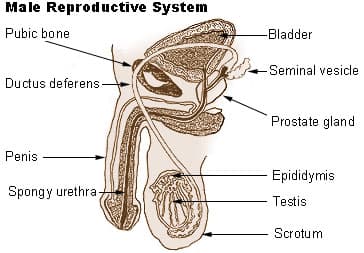
Sagittal view of the male reproductive system — the testes, scrotum, epididymis, ductus deferens, penis, prostate and seminal vesicle.
SEER Training Modules, U.S. National Cancer Institute — public domain (opens in a new tab) ↗What testicular cancer is
The U.S. National Cancer Institute describes testicular cancer as cancer that forms in the tissues of one or both testicles, most often in younger men. Almost all cases are germ-cell tumours, which are divided into two broad groups that are treated differently: seminomas, which tend to grow more slowly and are sensitive to radiation, and non-seminomas, which can grow faster and are treated with surgery and chemotherapy. The most common first sign is a painless lump or swelling in a testicle.
Diagnosis typically involves a scrotal ultrasound, blood tests for tumour markers (AFP, beta-hCG and LDH), and CT imaging to check for spread, with the removed testicle giving the definitive pathology and helping set the stage. Those tumour markers are also used to monitor response and follow-up. Browse the wider cancer types hub for related diagnoses.
Treatment options
The modalities the NCI lists for testicular cancer, and an honest note on each:
- Radical inguinal orchiectomy. Surgery to remove the affected testicle through an incision in the groin is almost always the first step, and it is both diagnostic and therapeutic. A testicular prosthesis can usually be offered if wanted.
- Active surveillance. For many early-stage tumours, no further treatment is needed straight away — instead you are monitored closely with tumour markers, imaging and exams, so that treatment is only added if it becomes necessary. This spares men who are already cured the side effects of chemotherapy or radiation.
- Chemotherapy. Platinum-based regimens — commonly BEP (bleomycin, etoposide and cisplatin) — are highly effective, used for non-seminomas and for disease that has spread. Cost scales with the number of cycles.
- Radiation therapy and lymph-node surgery. Radiation is used for some seminomas because they are radiosensitive. Retroperitoneal lymph-node dissection — surgery to remove lymph nodes at the back of the abdomen — is used for selected non-seminomas. Which of these applies is decided by your type, stage and markers, not a template.
See how these modalities work in general on the treatments & technology hub.
What it costs
There is no single testicular-cancer price, because the cost depends on the type and stage — an orchiectomy with surveillance for early-stage disease is very different from several cycles of chemotherapy or a lymph-node dissection, and follow-up markers and imaging continue for years. Every figure OncologyIstanbul™ publishes today is an illustrative placeholder pending verified partner-hospital quotes, and each is itemized so you can hold a real quote up against it line by line. See the Turkey Oncology Price Index or the full cancer treatment cost in Turkey breakdown.
The hospital, verified
We don’t show a wall of smiling surgeons or a “ranked” list — those are the easiest things to fabricate. Instead, you’re matched to one state-authorized Istanbul partner hospital whose urologic-oncology subspecialty fits your diagnosis, and you can verify its authorization against the Republic of Turkey Ministry of Health’s own records and its JCI accreditation in JCI’s public directory before you commit. Named specialist profiles appear only when a verified, consented physician is behind the name. See the full guide to cancer hospitals in Istanbul and how to check one yourself.
Where this fits
This is one diagnosis within the broader cancer treatment in Istanbul pillar. If you want your own reports read first, a free second opinion organizes and verifies your pathology, imaging and tumour markers into a plain-language case file in your language before you decide whether to travel.
Related cancers
Check everything here — us included
Common questions
Can I get testicular cancer treatment in Turkey?
Yes. Istanbul hospitals provide the full testicular-cancer pathway the U.S. National Cancer Institute describes — radical inguinal orchiectomy (removal of the affected testicle) as the first step, then, depending on the tumour type and stage, active surveillance, chemotherapy such as the BEP regimen, radiation therapy for some seminomas, or retroperitoneal lymph-node dissection. Many centres hold JCI accreditation and Turkish Ministry of Health state authorization, both of which you can check yourself. Start with a free case review of your reports so the type, stage and plan are understood before you travel.
How much does testicular cancer treatment cost in Istanbul?
It depends on the type and stage — an orchiectomy alone for early-stage disease costs far less than a course of chemotherapy over several cycles, or a retroperitoneal lymph-node dissection, and tumour-marker blood tests and imaging for follow-up add up over time. Istanbul typically runs below Western-European prices for the same protocol, but every figure OncologyIstanbul™ publishes today is an illustrative placeholder pending verified partner-hospital quotes, itemized so you can check a real written quote line by line. See the Turkey Oncology Price Index for current ranges.
Is testicular cancer curable?
Testicular cancer is one of the most treatable cancers. The NCI notes it is highly curable, including in many cases where it has spread, largely because it responds well to surgery and to platinum-based chemotherapy. That said, there is no single number that applies to every man — the tumour type (seminoma or non-seminoma), the stage, and your tumour-marker levels all matter, and outcomes are individual. Ask your oncologist what your specific type and stage mean for you rather than relying on a marketing statistic.
Should I bank sperm before testicular cancer treatment?
It is worth discussing before you start. Per the NCI, treatment for testicular cancer — surgery, chemotherapy or radiation — can affect fertility, and sperm banking beforehand is a recognised way to preserve the option of biological children. Because timing matters, this is a question to raise with your treating team early, ideally before orchiectomy or chemotherapy begins. A free case review can flag whether fertility preservation has been addressed in your reports. This is general information, not medical advice.
Start with a free 72-hour case review
Send your pathology, imaging and tumour-marker reports. Get a verified case file in your language — free, confidential, no obligation.
This page is general information, not medical advice. Medical facts are grounded in the U.S. National Cancer Institute; prices shown are illustrative placeholders pending verified partner-hospital quotes, not offers. Every cancer case is individual; assessments are based on the reports you provide and do not replace in-person examination.