Thyroid cancer treatment in Istanbul, Turkey
Thyroid cancer is most often treated with surgery to remove part or all of the thyroid, sometimes followed by radioactive iodine and lifelong thyroid-hormone tablets. The most common types — papillary and follicular — generally carry a favourable prognosis, though medullary and anaplastic types differ. Istanbul hospitals offer this full pathway, typically below Western-European prices for the same protocol. Every price we show is an illustrative placeholder until verified partner quotes exist, and you pay the hospital directly, never us. Start with a free review of your reports before you decide anything.
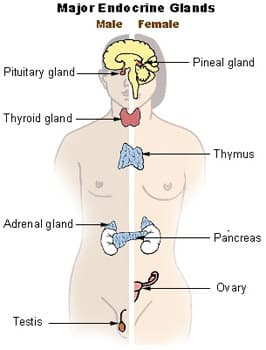
Overview of the endocrine system — the pituitary, thyroid, parathyroid, adrenal glands, pancreas and gonads.
SEER Training Modules, U.S. National Cancer Institute — public domain (opens in a new tab) ↗What thyroid cancer is
According to the U.S. National Cancer Institute, thyroid cancer begins in the small gland at the base of the neck and comes in several types. Papillary is by far the most common and usually grows slowly; follicular (including Hürthle-cell) is next. Together these “differentiated” cancers generally have a favourable outlook. Medullary thyroid cancer can run in families (linked to RET gene changes), and anaplastic is rare and aggressive.
Diagnosis usually starts with a neck exam and ultrasound of a thyroid nodule, a fine-needle aspiration (FNA) biopsy, and blood tests (TSH, thyroglobulin, and calcitonin for suspected medullary cancer). Most thyroid nodules turn out to be benign. Browse the broader cancer types hub for related diagnoses.
Treatment options
The modalities the NCI lists for thyroid cancer, and an honest note on each:
- Surgery. The mainstay — a lobectomy (one lobe) for small, low-risk tumours, or a total thyroidectomy for larger or higher-risk disease, sometimes with removal of nearby lymph nodes. The extent is chosen from your pathology, not a template.
- Radioactive iodine (RAI / I-131). Used after surgery for many differentiated (papillary/follicular) cancers to destroy any remaining thyroid tissue or microscopic disease. Medullary and anaplastic cancers do not respond to it.
- Thyroid-hormone therapy. Levothyroxine tablets replace the hormone the thyroid used to make and, at the right dose, help suppress any regrowth — usually taken long term.
- Targeted therapy (advanced disease). For cancers that no longer respond to radioactive iodine or that have spread, kinase inhibitors and gene-specific drugs (for example, RET-targeted therapy in medullary cancer) may be options. External-beam radiation is sometimes used for anaplastic cancer.
See how these modalities work in general on the treatments & technology hub.
What it costs
There is no single thyroid-cancer price, because the cost is driven by whether you have a lobectomy or a total thyroidectomy, whether lymph nodes are removed, whether radioactive iodine follows, and whether advanced disease needs targeted drugs. Every figure OncologyIstanbul™ publishes today is an illustrative placeholder pending verified partner-hospital quotes, and each is itemized so you can hold a real quote up against it line by line. See the Turkey Oncology Price Index or the full cancer treatment cost in Turkey breakdown.
The hospital, verified
We don’t show a wall of smiling surgeons or a “ranked” list — those are the easiest things to fabricate. Instead, you’re matched to one state-authorized Istanbul partner hospital whose endocrine / head-and-neck surgical subspecialty fits your diagnosis, and you can verify its authorization against the Republic of Turkey Ministry of Health’s own records and its JCI accreditation in JCI’s public directory before you commit. Named specialist profiles appear only when a verified, consented physician is behind the name. See the full guide to cancer hospitals in Istanbul and how to check one yourself.
Where this fits
This is one diagnosis within the broader cancer treatment in Istanbul pillar. If you want your own reports read first, a free second opinion organizes and verifies your ultrasound, biopsy and blood work into a plain-language case file in your language before you decide whether to travel.
Related cancers
Check everything here — us included
Common questions
Can I get thyroid cancer treatment in Turkey?
Yes. Istanbul hospitals provide the full thyroid-cancer pathway the U.S. National Cancer Institute describes — surgery (removing part or all of the thyroid, with lymph-node dissection where needed), radioactive iodine for differentiated cancers, thyroid-hormone therapy, and targeted therapy for advanced disease. Many hold JCI accreditation and Turkish Ministry of Health state authorization, both checkable before you commit. Start with a free case review of your ultrasound, biopsy and blood work so the type and plan are understood first.
How much does thyroid cancer treatment cost in Istanbul?
It depends on whether you have a lobectomy or a total thyroidectomy, whether lymph-node dissection is needed, whether radioactive iodine is used afterwards, and whether the cancer is advanced enough to need targeted drugs. Istanbul typically runs below Western-European prices for the same protocol, but every figure OncologyIstanbul™ publishes today is an illustrative placeholder pending verified partner-hospital quotes, itemized so you can check a real written quote line by line. See the Turkey Oncology Price Index for current ranges.
What is the success rate for thyroid cancer?
We won't reduce this to one marketing number. That said, the NCI notes that differentiated thyroid cancers — papillary (the most common) and follicular — generally have a favourable prognosis, particularly in younger patients, while medullary and the rare anaplastic type behave very differently. Outcomes are individual and depend on the exact type, stage and your own health, not on which country you choose. Ask your oncologist what your specific pathology and stage mean for you.
Do I need my whole thyroid removed?
Not always. Per the NCI, the extent of surgery depends on the type, size and risk of the tumour: a lobectomy (removing one lobe) may be enough for a small, low-risk cancer, while a total thyroidectomy is used for larger or higher-risk disease, often followed by radioactive iodine. For very small, low-risk papillary cancers, active surveillance is sometimes an option. This is general information — the right operation is a decision for your treating team based on your pathology.
Start with a free 72-hour case review
Send your ultrasound, biopsy and blood work. Get a verified case file in your language — free, confidential, no obligation.
This page is general information, not medical advice. Medical facts are grounded in the U.S. National Cancer Institute; prices shown are illustrative placeholders pending verified partner-hospital quotes, not offers. Every cancer case is individual; assessments are based on the reports you provide and do not replace in-person examination.